
Chandrayaan 3: Five hurdles India’s third lunar mission overcame to date
The world awaits Chandrayaan-3’s historic touchdown on the Moon’s south pole on Wednesday. After Russia’s Luna 25 crash, folks throughout the globe hope that every thing goes as deliberate with Chandrayaan-3 when it can try its mushy touchdown. Till now, the spacecraft and all of the programs are working completely and ISRO says no contingencies are anticipated on Wednesday.
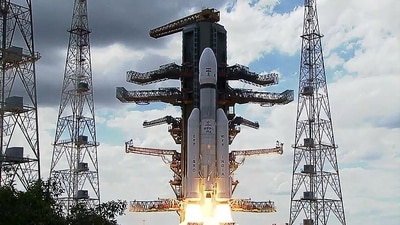
From the day of its launch on July 14, the spacecraft efficiently carried out all of the steps that positioned it nearer to the Moon. The essential steps concerned coming into the Moon’s orbit, adopted by finishing up manoeuvres after which the separation of the Propulsion Module and Lander Module.
Here are 5 hurdles that Chandrayaan-3 overcame throughout its journey to date:
July 14: LVM3 M4 car efficiently launched Chandrayaan-3 into orbit. Chandrayaan-3, in its exact orbit, started its journey to the Moon.
July 15: The first orbit-raising maneuver (Earthbound firing-1) efficiently carried out at ISTRAC/ISRO, Bengaluru. Spacecraft was in 41762 km x 173 km orbit.
August 1: The spacecraft was inserted into the translunar orbit. The orbit achieved was 288 km x 369328 km. Lunar-Orbit Insertion (LOI) was deliberate for August 5.
August 5: Chandrayaan-3 efficiently inserted into the lunar orbit. The orbit achieved was 164 km x 18074 km, as supposed.
August 17: Lander Module (LM) was efficiently separated from the Propulsion Module (PM).
What will occur after touchdown?
The Propulsion Module which is able to stay in Moon’s orbit for months or years, has an hooked up payload often called the Spectro-polarimetry of Habitable Planet Earth (SHAPE), to check Earth’s spectral and polarimetric measurements from the moon’s orbit. Simply put, SHAPE will analyse sure signatures of Earth’s gentle.
Study of the lunar floor by payloads
Once the Lander Module reaches the Moon’s floor, the lander Vikram will deploy its payloads. These embrace Chandra’s Surface Thermophysical Experiment (ChaSTE) for measuring temperature and thermal conductivity. Another payload, the Instrument for Lunar Seismic Activity (ILSA), will measure seismic exercise across the touchdown website. The Langmuir Probe (LP) will estimate plasma density and modifications. A passive Laser Retroreflector Array from NASA might be used for lunar laser research.
Role of Pragyan rover
The rover Pragyan will carry an Alpha Particle X-ray Spectrometer (APXS) and a Laser Induced Breakdown Spectroscope (LIBS) to find out the weather within the touchdown website’s neighborhood.
Source web site: www.hindustantimes.com


